Essay · 7 min read
Collaboration Is the Work
Design doesn't happen alone. And it doesn't happen without consequences.
A designer once told me, "I designed this," and I said nothing. She presented the work in a critique, clean and coherent and clearly hers in the most immediate sense, since she had assembled the files in Figma, refined the flow, and walked us through each moment with clarity. But I knew the history. I remembered where the ideas had started: a sketch a teammate pinned to the wall, a long Slack thread that reframed the approach, and a design review two weeks earlier that had reshaped the layout entirely.
She didn't mean harm. She just didn't name the others. And when people noticed (when they came to me afterward, quietly, to say "hey, that wasn't just hers"), I realized I'd made a mistake too. I had let the moment pass. I had let the work speak without its full history. I had reinforced the myth that good design comes from individual genius rather than from the web of collaboration that actually sustains it.
That moment taught me what I wish I had learned earlier in my career: that we often treat collaboration as background noise, when it is, in fact, the main event.
Design is collaboration, at every level, in every direction, and across every surface of the work.

This is what the web of collaboration looks like when you draw it on the page. Researchers, copywriters, designers, content strategists, product managers, design executives, all on the same line, all linked to faces. The studio is not a person.
See Made By the Collective →Designers Are Trained for Individuality, but Deployed Into Systems
From the start, most of us are trained to operate as individuals. We are told to craft a personal portfolio. Develop our own taste. Speak to our own process. Tell our own story. The narrative of the singular designer (clever, autonomous, distinct) is so baked into our early education that we don't even notice it shaping how we approach the work. And for a while, it serves us well. We find our voice. We learn how to articulate it.
But product work doesn't reward individuality in the same way. Real product design is porous. It's shaped by people across disciplines and timelines and reviews and roadmaps. A strong design is the outcome of alignment: of feedback taken and re-taken, of pivots made in collaboration, of decisions weighed across engineering, product, research, and support.
In this world, insisting on singular authorship is isolating. It undercuts the very fabric of trust and shared intent that makes a product strong.
The moment a designer says "I did this," they may be claiming ownership, but they're also risking disconnection. They're positioning themselves outside of a team that was, in truth, inside the work all along.
And the team will feel it.
Within-Design Collaboration Is Just as Fraught
Collaboration challenges us even within our own discipline. I've seen this up close. I once had a senior designer on my team. Generous, talented, and deeply committed to the group's success. She'd quietly support her peers, especially the newer ones. She'd hop into their files, help unblock tricky flows, suggest subtle improvements, finesse interactions that weren't quite landing. She'd do all this without ever needing her name on anything. She wasn't looking for credit. She just wanted the work to be good.
And it was. Deadlines were met. Reviews went well. Everyone looked good.
Until one day, she quit.
In our exit conversation, she told me she felt invisible. She had given her time, her ideas, her care, and gotten back almost nothing: no Slack shoutouts, no names in retros, no public praise, not even private acknowledgment from the peers she'd helped. She wasn't bitter. But she was done.
And I couldn't argue with her, because I had seen it happen and let it slide.
I had mistaken collaboration for culture.
I had believed that generosity would naturally be met with gratitude.
But the truth is, generosity without recognition becomes erasure.
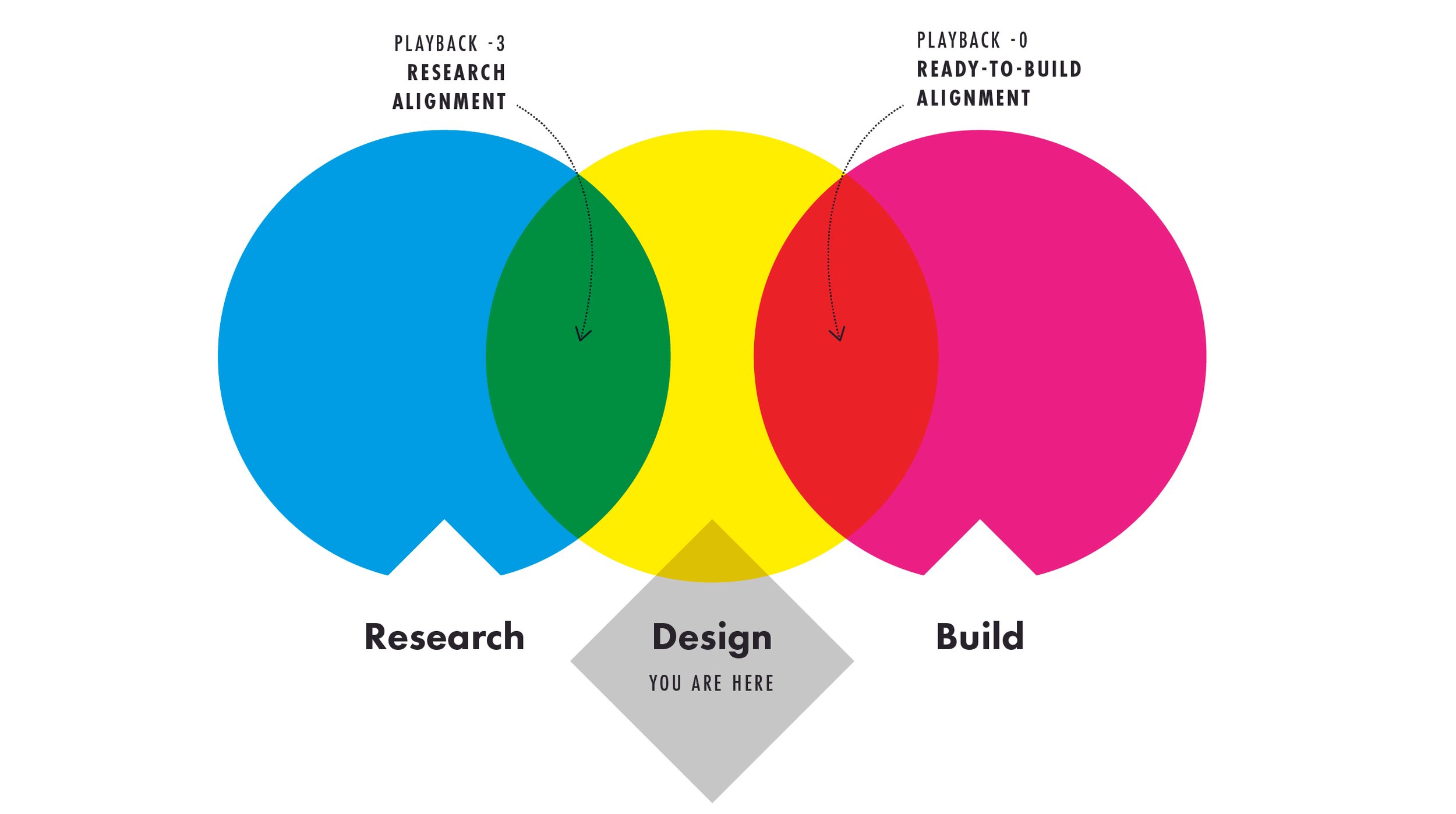
At Ontada we built the artifact that names who did what so the senior designer's quiet help is on the record. A process diagram like this one is a receipt. It puts on record who did the work.
See Ontada Research →It teaches people that supporting others quietly is the fast track to being forgotten.
And we lose the very people who hold teams together.
Public Praise Is Design Infrastructure
I've come to believe that public acknowledgment is one of the most underrated tools of leadership, not because it flatters egos, but because it clarifies the shape of the work.
When you publicly name someone's contribution, especially when it wasn't obvious, especially when it wasn't in the spotlight, you send a signal: We see you. And that signal travels. It becomes part of your team's emotional architecture. It teaches people what matters.
Credit is a structural act. It makes labor legible. It strengthens trust. It reminds people that they belong.
And praise, when given well, deepens ownership. It makes clear that no great work happens alone, and that acknowledging complexity is a mark of leadership.
Collaboration Changes with Power
There's another story I've carried with me for a long time, one that's harder to tell.
Early in my career, I had a colleague who helped me grow. They believed in me, opened doors, gave feedback that made me sharper. I wouldn't have gotten my first promotion without their support. I saw them as a mentor, and later, a peer. We landed at the same level, working on the same initiatives.
But the dynamic never really shifted. They still saw me as junior, as the person they had shaped. I noticed it in meetings: my input being dismissed, or redirected, or quietly overwritten. I noticed it in 1:1s: when I'd raise a concern and be met with deflection instead of engagement.
I had changed. Our relationship hadn't.
Collaboration only works when people grow together. Power has to adjust as context shifts. Trust has to be re-negotiated over time. When that stops happening, what's left is a performance of partnership, which is something else entirely.
Designers aren't immune to power. We need to name the dynamics we inherit and the ones we perpetuate. Because collaboration without equity is just dependency in disguise.
Cross-Functional Work Is the Work
If we're being honest, much of design doesn't happen in the design file. It happens in conversations, in planning meetings, in quiet 1:1s with engineers, in the 15 minutes after a review where you reframe a decision. It happens in tension: between tradeoffs, between strategies, between humans who see the world differently.
Designers who thrive in product environments are the ones who learn to navigate those tensions with grace. They translate across disciplines. They name assumptions. They slow down conversations that are moving too fast, and speed up ones that are stuck. They make the invisible visible, the complicated understandable, the emotional navigable.
And they do it without asking to be the smartest person in the room.
They do it by listening, by making others feel smarter, by making the room better. Calling that a soft skill undersells it; it's what holds the rest of the work up.
Collaboration Is a Design Skill
We need to stop treating collaboration as chemistry. Easygoing isn't the same as collaborative. Agreeable isn't either. And it's not a fixed trait you either have or you don't.
Collaboration is design.
It requires deliberate choices:
- What meetings to attend, and how to show up in them
- When to challenge and when to yield
- How to give feedback that moves the work without flattening the person
- How to hold disagreement without collapsing trust
- How to build rituals where the quietest people in the room still shape the work
You should be able to show your collaborative thinking the way you show your visual thinking: with intention, with reflection, with pride.
The Real Work Is the Relationships
Design systems matter. Design tools matter. But in the end, your design culture is defined by relationships.
It's how you treat one another, how you remember each other, how you make space, how you repair.
If we want to build better teams, we have to treat relationships as real infrastructure: something worth investing in, protecting, and designing for, not an afterthought.
My Process Is People
I don't have a framework for collaboration. I don't have a canvas or a workshop or a maturity model. What I have is practice: rehearsal, repetition.
I learned how to build creative alignment by doing it. Probably first in a summer camp classroom, teaching fidgety kids how to move in unison for a dance they didn't understand. Later, conducting a choir, helping people with very different voices land a shared note. And now, in product teams: helping people bring different roles, different expectations, different egos into something shared.
The secret is care. You try. You listen. You rehearse. You do the work. You get it wrong. You repair. You do it again, until trust forms, until the team becomes real, until the machine runs.
Collaboration is choreography, and the best teams rehearse it instead of hoping for it.